Union Pacific Railroad and Bozeman Trail Initiative Held Meeting
In a recent talk at the Fort Phil Kearny Interpretive Center, historians delved into the significance of the Union Pacific Railroad along the Bozeman Trail during the mid-1800s, a period marked by westward expansion and conflict.
The Bozeman Trail, established in 1863, was the shortest and most direct overland route from Fort Laramie to the Montana gold fields, crossing through the traditional hunting grounds of the Cheyenne, Arapaho, and Lakota tribes. This trail led to intense competition for resources and conflicts such as Red Cloud’s War (1866-1868). The Union Pacific Railroad, completed later as part of the first transcontinental railroad, played a crucial role in connecting the western territories to the rest of the United States, facilitating migration, commerce, and military movements.
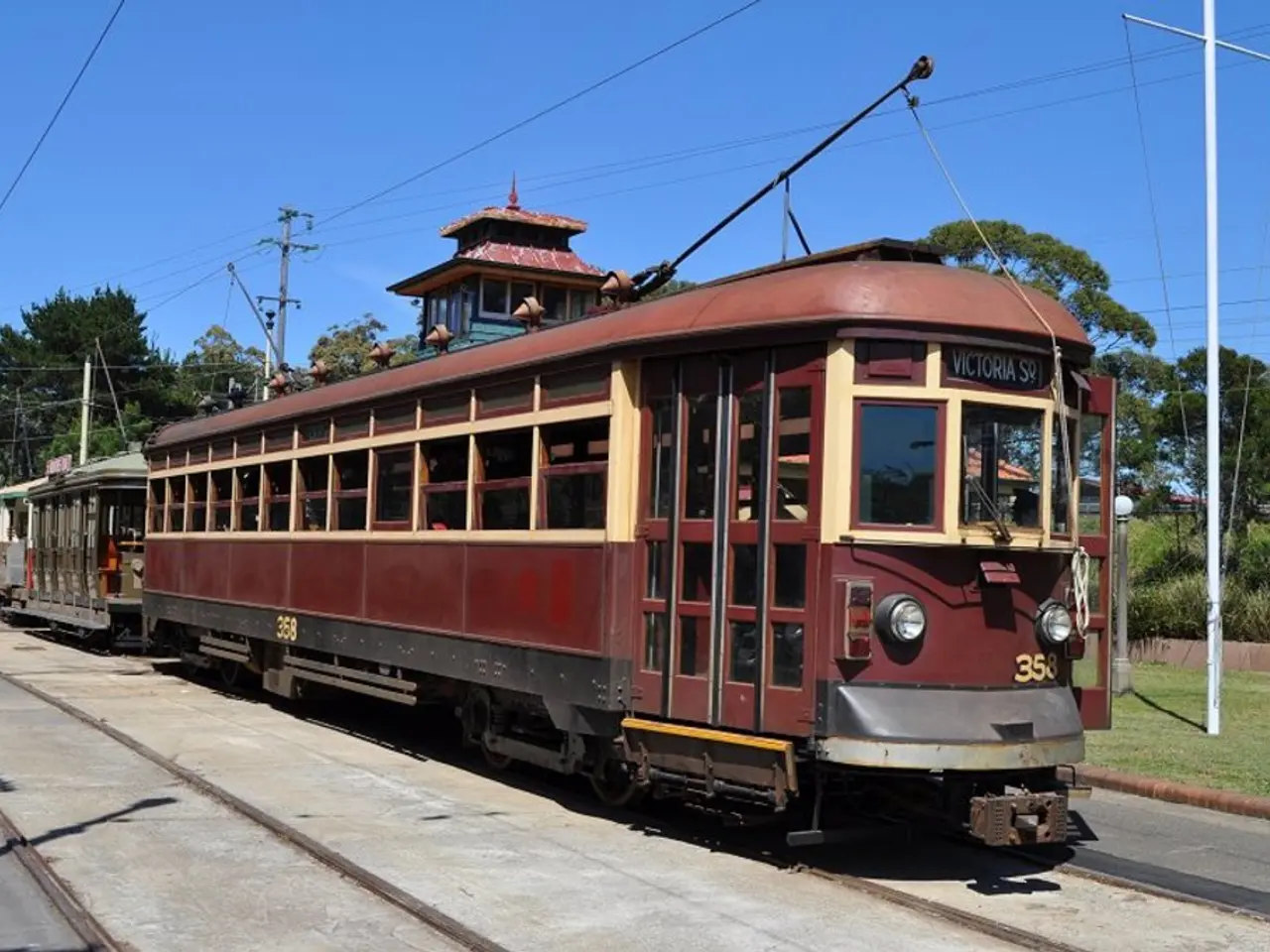
The Union Pacific Railroad's significance lies in its role in supporting and accelerating settlement and economic development in the region. It allowed for faster, more reliable transport of people and goods, helping solidify U.S. presence in contested areas and contributing to the eventual decline of Native American control over these territories.
Historian Sonny Reisch, who served as superintendent at Fort Phil Kearny and later as historian and curator at the Fort, spoke about the railroad's instrumental role in enabling and accelerating the transformation of the western frontier. Reisch also mentioned another theory about why forts were built along the Bozeman Trail, highlighting their importance for the safety of white travelers during that time.
The talk was part of the Hell on Wheels exhibit currently on display at the fort and was attended by around 20 people. Dave McKee, president of the Fort Phil Kearny/Bozeman Trail Association, introduced the speakers, while Mary Ellen McWilliams, another historian, presented alongside Reisch.
Reisch also spoke about events in the United States in 1866, including reconstruction, the re-integration of Southern states into the Union, and the impeachment of President Andrew Johnson. He also mentioned the Ames Monument along I-80 at the Vedauwoo exit, honoring brothers Oliver and Oakes Ames, Union Pacific financiers for the Union Pacific Railroad.
While direct search results for the content of the Fort Phil Kearny Interpretive Center talk are not available, the key significance of the Union Pacific Railroad along the Bozeman Trail is clear: it was instrumental in enabling and accelerating the transformation of the western frontier, impacting Native American lands and settlement patterns during the westward expansion era. This interpretation aligns with the known history of railroad expansion and frontier trails during the 19th century.
[1] Red Cloud’s War: The Last Great Conflict between the U.S. Army and the Plains Indians, Stephen E. Ambrose, 1996.
- The Union Pacific Railroad, instrumental in enabling and accelerating the transformation of the western frontier, not only facilitated the migration and commerce but also contributed to the financial sector by funding the railroad through financiers such as the Ames brothers.
- The Bozeman Trail, aside from the conflicts it sparked, also played a crucial role in the industry sector by being the shortest and most direct route for transportation during the westward expansion, impacting not only the transportation industry but also the economic development of the region.