
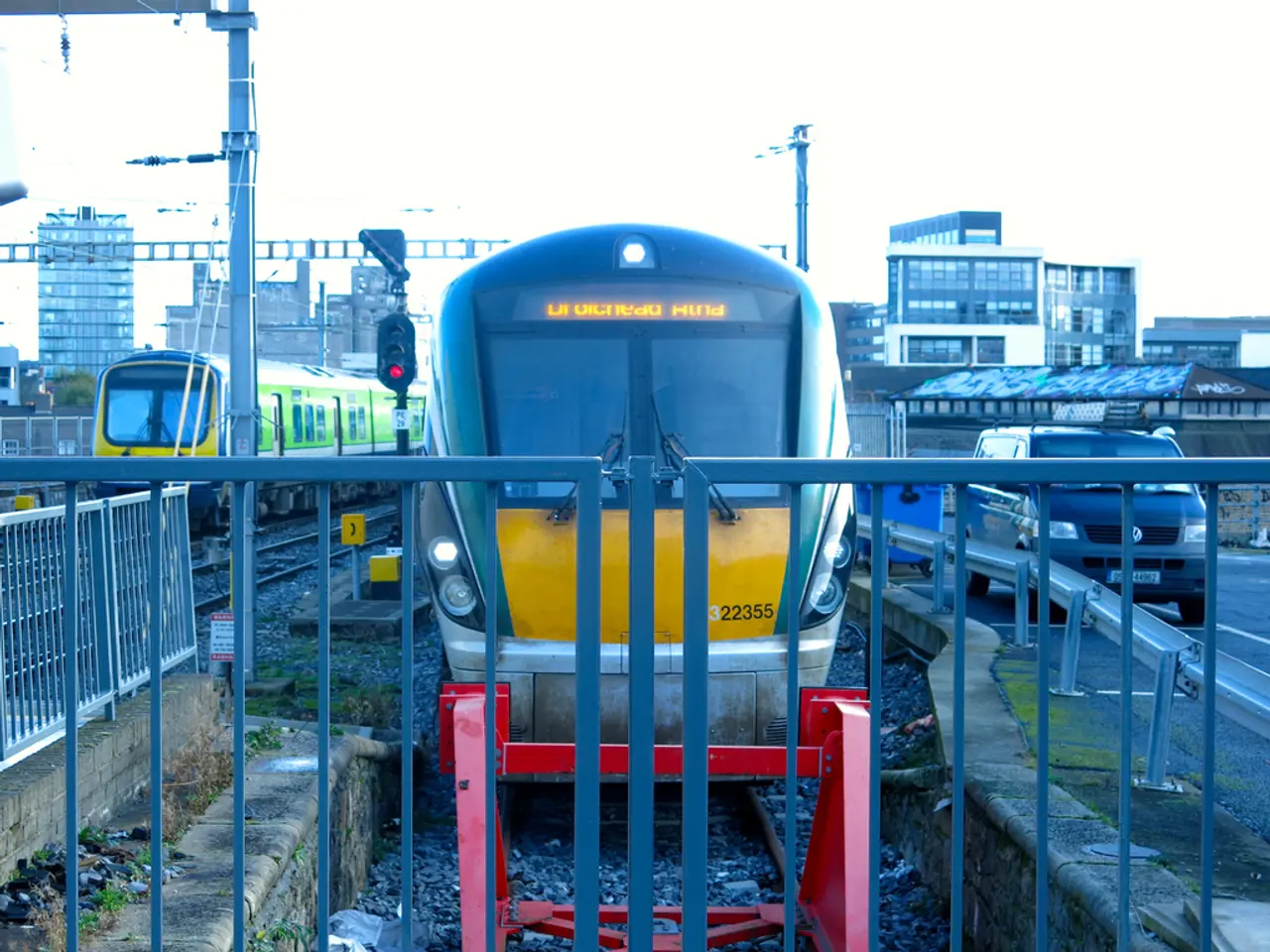
Trains failing to meet the set timeliness benchmark during the initial part of the year
Deutsche Bahn, Germany's national railway company, is currently grappling with poor punctuality and reliability in its long-distance train services. In the first half of 2023, over a third of long-distance trains arrived late, with delays often exceeding 30 minutes [2][4].
Key reasons for the poor performance
- Infrastructure backlog and maintenance deficits: Germany's rail network is estimated to require €150 billion for modernization and restoration. The aging and partly obsolete infrastructure results in frequent line disruptions, technical failures, and ongoing construction sites that cause additional delays [3].
- High operational pressure and overcrowding: Deutsche Bahn carries approximately 1.87 million passengers daily, causing crowding and operational strain. Inadequate organization leads to seat reservations not guaranteeing usable seats, exacerbating delays and passenger discomfort [2].
- Communication failures and poor customer management: Passengers report insufficient and unclear announcements, last-minute information, limited substitute trains, and overwhelmed staff, leading to frustration and inefficient handling of disruptions [2].
- Organizational and systemic inefficiencies: DB suffers from chaotic processes in scheduling and recovery from disruptions, with criticism of inflated delay reports which do not reflect real passenger experience, compounding missed connections and long waiting times [2][3].
- External factors and demands: Frequent strikes and coordination issues in international routes further complicate punctuality [5].
Actions being taken to improve the situation
- Government and DB investment efforts: German authorities are targeting significant investments in network upgrades and rolling stock modernization to reduce the large infrastructure deficit [3].
- Operational reforms: Deutsche Bahn is reviewing scheduling practices and crisis management protocols aiming to improve recovery times and alternative transport offers during disruptions [2][4].
- Digitalization and communication upgrades: Efforts are underway to enhance digital passenger communication systems for timely updates and better disruption management, aiming at reducing communication gaps with travelers [2].
- Focus on expanding capacity: Adding new trains and increasing track capacity in congested corridors to alleviate overcrowding and reduce bottlenecks is part of DB’s medium-term strategy [3].
Despite these efforts, improving punctuality remains a complex task affected by legacy infrastructure issues, rising demand, and systemic management challenges. As of mid-2025, significant delays persist, and German policymakers continue to stress the need for sustained investment and reforms to restore Deutsche Bahn’s reliability and customer trust [1][3][4].
Customers understand and accept the delays due to infrastructure issues, but the abolition of family reservations has caused outrage among politicians, consumer associations, and families, as many families are no longer able to book seats [1]. In contrast, Deutsche Bahn remains the most attractive transport company for families, with children up to and including 14 years old traveling free when accompanied by their parents [1].
[1] Deutsche Bahn's current poor punctuality and reliability in long-distance train services stem from multiple interconnected issues including chronic infrastructure deficiencies, technical breakdowns, high operational demands, and organizational inefficiencies.
[2] [4] (Source: Deutsche Bahn's punctuality report for the first half of 2023)
[3] (Source: German Government's investment plan for Deutsche Bahn)
[5] (Source: International Union of Railways' report on coordination issues in international rail traffic)
- The poor punctuality and reliability in Deutsche Bahn's long-distance train services could be addressed by addressing organizational inefficiencies in the finance and industry sectors, as well as investing in modernizing and maintaining public-transit infrastructure, such as transportation systems.
- To improve the operation of Germany's national railway company, Deutsche Bahn, it is crucial to focus on digital communication upgrades, operational reforms, and reducing infrastructure backlogs in the industry and finance sectors, which could lead to better punctuality and customer trust.




