
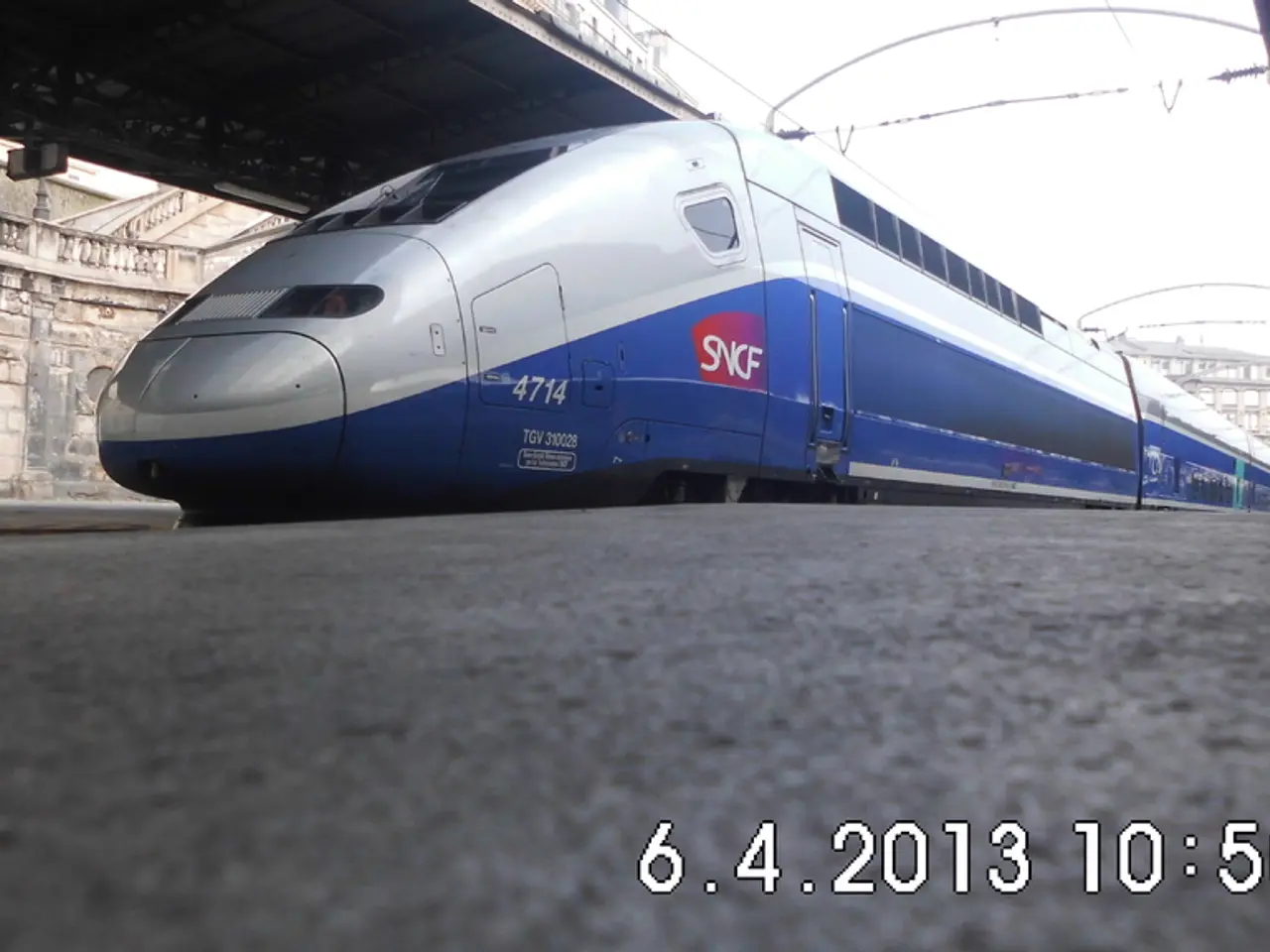
The Future of Europe's Rapid Transit Railway System: A Possibility or a Dream?
The Starline proposal, a groundbreaking initiative, envisions a pan-European rail network that aims to revolutionize travel across the continent. This ambitious project seeks to create an ultra-high-speed continental rail system, drastically improving connectivity between European capitals.
The proposed network spans approximately 13,670 miles (22,000 km), connecting 39 European cities, from Dublin to Kyiv and Helsinki to Lisbon. This vast network transcends current national rail systems, marking a uniquely pan-European project [1][3][5].
Trains on this network are planned to travel at speeds of between 186 and 248 miles per hour (300-400 km/h), significantly reducing travel times. For example, the journey from Helsinki to Berlin, currently over 24 hours, could be reduced to just 5 hours [1]. These speeds align with current high-speed rail technology, indicating technical feasibility on a much larger, interconnected scale.
The project proposes new dedicated infrastructure, effectively a "continental subway," requiring massive construction efforts including tracks, stations, and electrification systems. The network is designed to have a coherent visual identity with uniform train designs, contrasting today’s fragmented national operators to create a unified user experience [1].
The Starline proposal emphasizes a pan-European, integrated network, presumably requiring harmonized ticketing systems across countries. While explicit details on ticketing and tariff integration are limited, such integration is a necessary component to meet the project's vision of seamless travel [1].
The sources do not detail explicit funding mechanisms, but the project's scale—comparable to or surpassing major transnational infrastructure projects—requires massive investment from EU institutions, national governments, and likely private partnerships. Environmental benefits and economic growth potential may justify public and private funding support [3][5].
Political challenges include negotiating cross-border cooperation, standardization, and intense upfront capital costs. The inclusion of countries with varied political stability (e.g., Ukraine, Turkey) adds complexity.
Despite these challenges, the idea of a highly integrated, fast, and unified European rail system aligns with EU goals for sustainability and connectivity, suggesting strong institutional interest. The actual implementation would likely span decades with phased rollouts, starting from critical corridors and progressively expanding [3].
In conclusion, the Starline proposal is an inspiring and forward-looking vision for European rail integration with realistic technological foundations but requiring substantial political will, coordinated funding, and long-term commitment to materialize. It represents possibly the most ambitious step toward a truly unified, ultra-fast, and sustainable European transport network [1][3][5].
- The Starline proposal, a visionary initiative, not only aims to revolutionize travel across Europe through a pan-European rail network but also seeks to integrate industry and finance across the continent.
- As the proposed network spans various European cities, it might stimulate general news and policy-and-legislation discussions regarding transportation and the environment.
- With the new dedicated infrastructure, the Starline proposal could potentially integrate jobs and politics on a larger scale by fostering closer connections between European capitals and cities.
- The proposed high-speed continental rail system, requiring massive construction efforts, suggests the need for effective policy-and-legislation and coordination to ensure seamless transportation between countries.
- The Starline proposal, touted as an ambitious and inspiring step toward a unified, ultra-fast, and sustainable European transport network, will likely face challenges, such as political integration and financing, which will need careful deliberation in various sectors, including politics and finance.




