
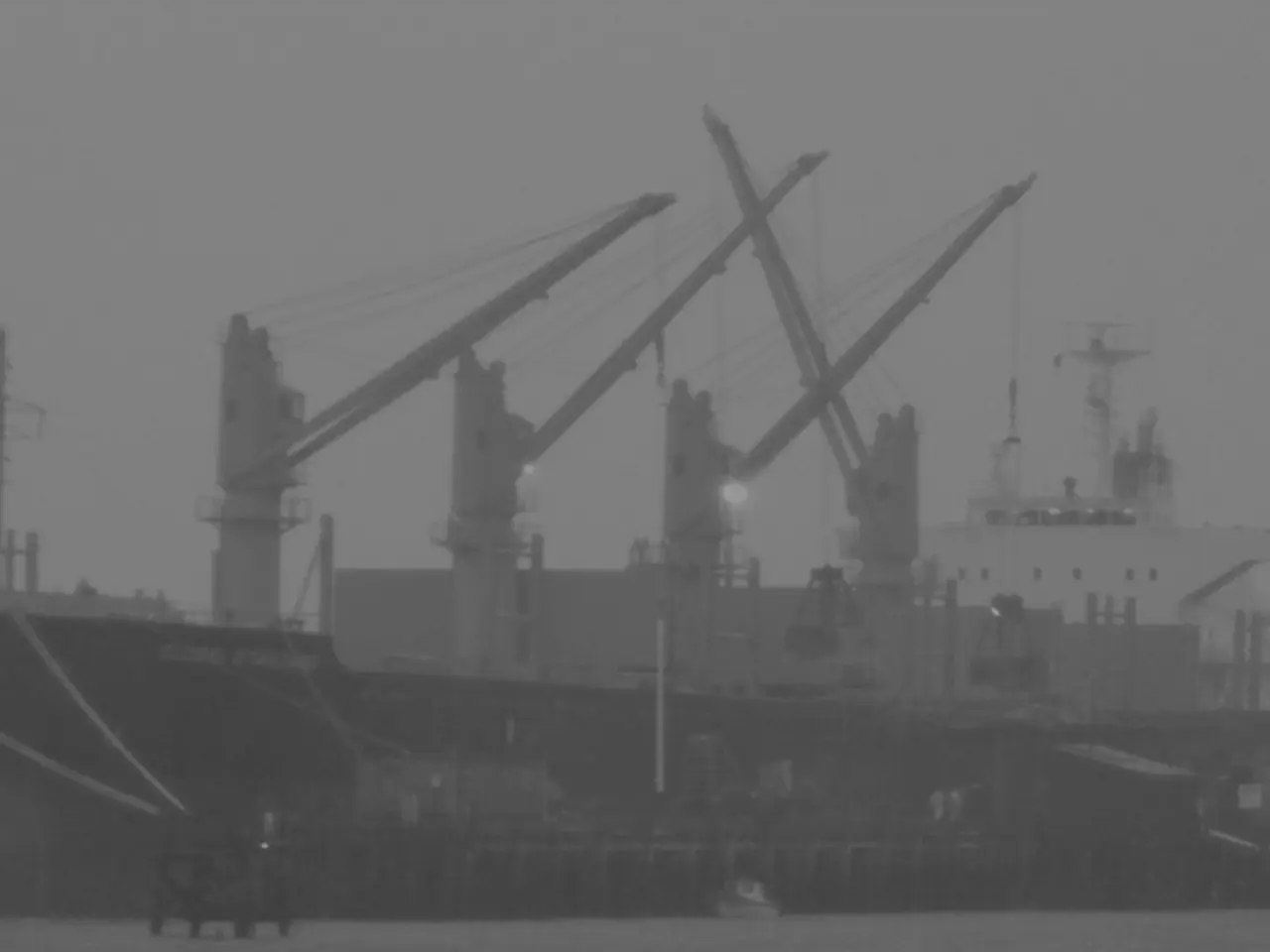
Switching Gears on the Kiel Canal: Doubts from Maritime Powerhouses
Norwegian Cruise Line (NOK) faces potential irrelevance amidst industry competition shift
The waters of the North Sea-Baltic Sea Canal (NOK), seemingly calm according to the General Directorate of Waterways and Shipping (GDWS) in Bonn in 2023, are far from tranquil for the Initiative Kiel-Canal (IKC) and the Nautical Association in Kiel (NVzK). Both organizations, in a joint missive to the Federal Ministry of Transport, expressed serious reservations about the canal's future prospects.
In a joint letter to their superiors, these maritime heavyweights articulated their deep concern about the medium and long-term outlook of the world's busiest artificial waterway. Jens Broder Knudsen, IKC's chairman, put it succinctly: "This lifeline for German imports and exports is becoming less and less appealing to users."
The causes for alarm encompass a myriad of issues. Firstly, the infrastructure of the approximately 100-kilometer-long canal shows definite signs of wear and tear, necessitating significant upgrades to ensure safety and efficiency for traffic. Failure to invest in maintenance and modernization may result in operational bottlenecks and safety hazards.
Secondly, the canal's allure to commercial and nautical users appears to be waning, possibly due to the emergence of alternative routes. As the Arctic ice melts, the Northeast Sea Route is becoming a strategic maritime corridor, offering a competitive alternative for transporting goods between Europe and Asia. Backed by cutting-edge icebreakers and state-of-the-art port infrastructure in Russia, this new route stands poised to divert traffic away from the canal.
Should these concerns remain unaddressed, the economic and strategic ramifications could ripple through regional maritime trade and logistics, reaching as far as the ports connected by the canal. Aging infrastructure, competition from emerging routes, and the potential loss of the canal's traditional importance have the maritime community on high alert, advocating for urgent action to preserve this vital waterway.
[1] Overall, the IKC and NVzK expressed concerns that inadequate maintenance and modernization, coupled with growing competition from emerging Arctic shipping routes due to climate change, are causing the North Sea-Baltic Sea Canal to lose its traditional appeal and importance for maritime users in 2023.
[2] The concerns include: Condition and Infrastructure Issues, Loss of Appeal for Users, Competition from Alternative Routes, and Strategic and Economic Impacts.
Finance and transportation industries could face potential challenges if the concerns raised by the IKC and NVzK about the North Sea-Baltic Sea Canal remain unaddressed. The loss of appeal for users, competition from alternative routes, and the potential economic and strategic impacts could all affect the flow of goods and resources, which could in turn affect finance-related activities.




%20faces%20potential%20irrelevance%20amidst%20industry%20competition%20shift)