
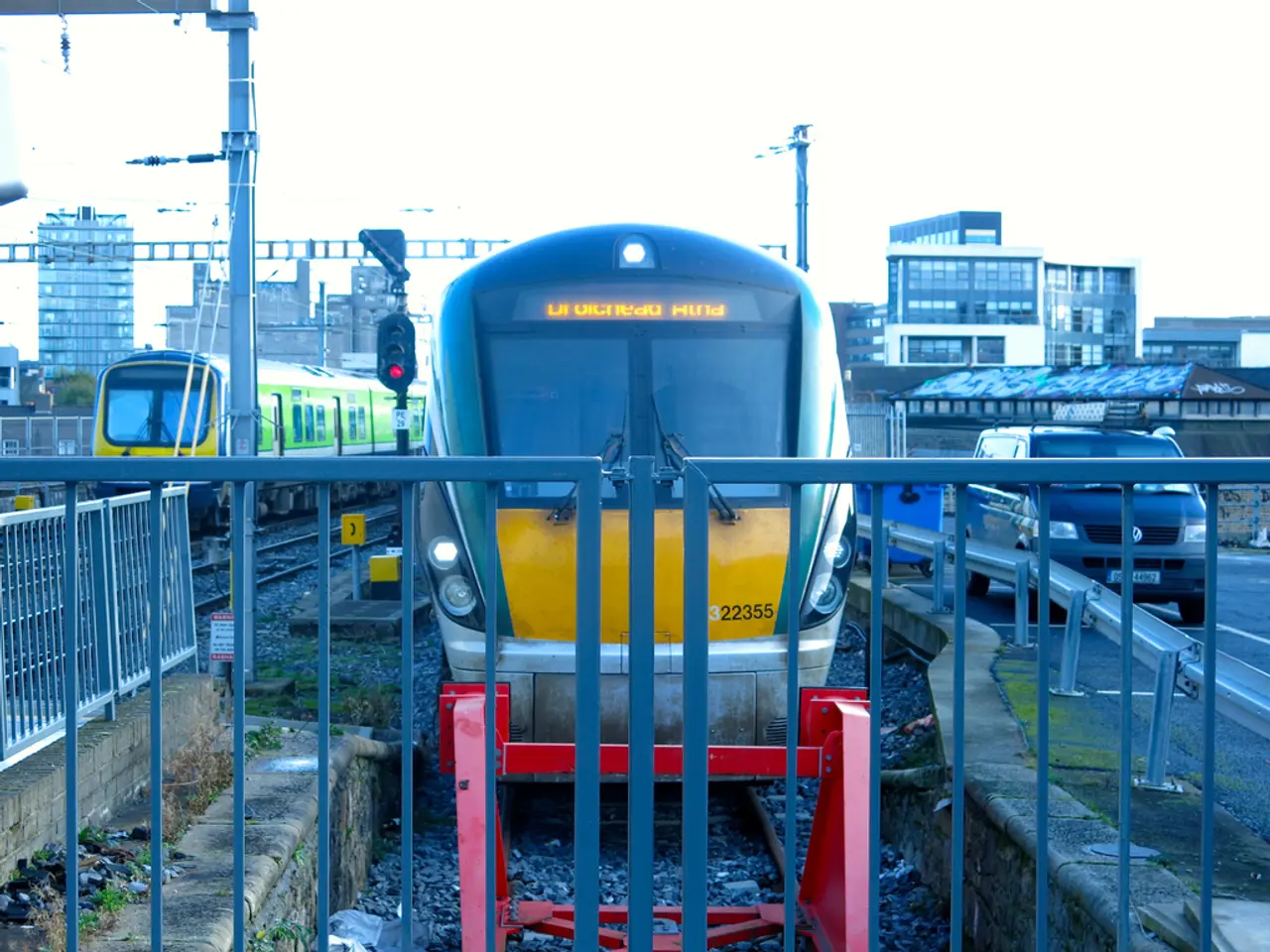
Fast train proposal for Trás-os-Montes region?
In a significant step towards improving regional connectivity and competitiveness, the Portuguese government has initiated feasibility studies for a high-speed rail link between Porto, Vila Real, Bragança, and the Spanish border. This ambitious project, which could potentially connect to Sanábria/Zamora in Spain, marks the first time the State has concretely developed such studies for this region.
The conception, design, construction, financing, maintenance, operation, requalification, expansion, and modernization of this national rail network is being spearheaded by Infraestruturas de Portugal (IP), in collaboration with the Northern Regional Coordination and Development Commission (CCDR-N). This collaboration is aimed at developing infrastructure and public service networks in a territorially coherent manner and on a regional scale.
The initiative is a government priority, as emphasized by the Minister of Infrastructure, Miguel Pinto Luz. The Minister stated that the feasibility study is crucial to avoid unfulfilled promises of previous years and stressed the necessity of these studies and project designs as essential precursors to any construction work.
The Porto-Zamora rail link has been added to the list of investments to be coordinated with Spain. This project, along with other high-speed train projects such as Aveiro-Salamanca and Huelva-Seville, has been prioritized by the Portuguese government.
The CIM-TTM, committed to regional development, has also shown support for the project. The organisation, which promotes cohesion among its municipalities, enhances the value of the territory, and improves transportation connections, particularly rail, as a key factor in connectivity and competitiveness, believes that the project could demonstrate a unified Portugal, eliminating the need for interior or coastal regions.
The feasibility studies aim to evaluate the best solution for a district that has had no railway access for 33 years. The studies are currently underway, with no further detailed timelines or outcomes reported yet. However, the government's commitment indicates progress in the assessment phase.
The collaboration agreement for the feasibility studies was signed between IP, the Northern Regional Coordination and Development Commission (CCDR-N), and the Intermunicipal Community of Terras de Trás-os-Montes. The signing ceremony took place in the auditorium of the Bragança Municipal Theater.
Luís Montenegro, at the end of the Portuguese-Spanish summit in October in Faro, announced that the Porto-Zamora rail link is under study to be further developed in the coming years. Pedro Lima, president of CIM-TTM, stated that the agreement could be a matter of justice, as Trás-os-Montes is at the center of a vast peninsular region.
References to broader transport infrastructure in Porto and Portugal show ongoing improvements but are separate from this specific rail project. The latest updates as of July 2025 on the feasibility studies indicate that the Portuguese government is actively prioritizing and conducting these studies.
The collaboration between Infraestruturas de Portugal (IP), the Northern Regional Coordination and Development Commission (CCDR-N), and the Intermunicipal Community of Terras de Trás-os-Montes, aimed at improving regional infrastructure, includes the Porto-Zamora rail link feasibility studies. The feasibility studies for this project, which could potentially revolutionize transportation connections between Portugal and Spain, also receive support from the CIM-TTM, an organization focused on regional development.




