
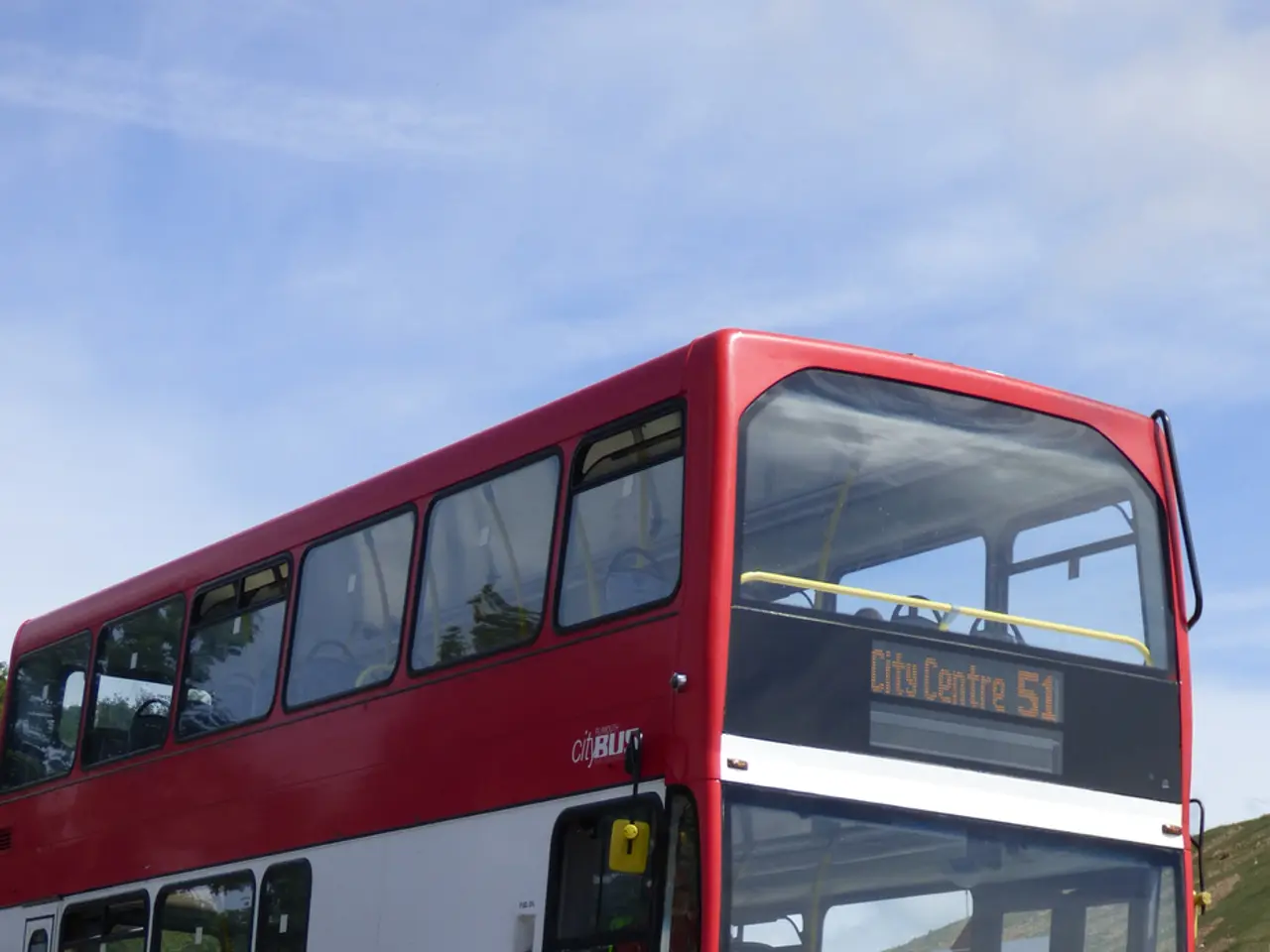
Electric-powered buses join the Turquoise Flotilla
The city of Lindau, located in southern Germany, is embarking on a transition to clean mobility, with a focus on electric buses (E-buses) and charging infrastructure. This shift comes after a series of deliberations and decisions by city councillors and committees.
In a move that signals the right time for the entry into e-mobility, most city councillors agree that the transition is necessary. Hannes Rösch, city works chief, echoed this sentiment, stating that there is an urgent need for action regarding the buses.
The financial implications of this transition have been a point of concern for some, notably Ulrich Jöckel (FDP). He expressed worries about the potential financial burden, estimating that the investment could increase the deficit close to two million euros. However, the Finance Committee, after careful consideration, decided, with one dissenting vote, to acquire E-buses and charging infrastructure.
The city's investment plan includes allocations of around 763,000 euros in 2026, around 1.3 million euros in 2027, and around 1.4 million euros in 2028. The specific number of E-buses the city plans to purchase by 2027 remains undisclosed at this time. For more detailed information, it is recommended to check official Lindau city transport plans, municipal announcements, or local government sources that detail their public transport procurement strategies.
The transition to clean mobility in Lindau is gradual and aims to ensure secure operation, responsible costs, and compliance with climate protection. This approach is supported by Daniel Obermayr (BL), who advocates for a gradual transition to gain experience and create value in regional circuits. Andreas Reich (FW) also backs the transition, citing the availability of funding programs as a key factor.
The decision to transition to clean mobility comes as the city's current buses, which are approximately 15 years old and have approximately one million kilometers on the clock, require replacement. The increasing difficulty in obtaining replacement parts for these buses further underscores the need for an upgrade.
In 2020, there was a controversy over Lindau's decision to buy diesel-hybrid buses. However, the city's commitment to clean mobility remains steadfast, with Ulrich Jöckel (FDP) relying on HVO 100, a diesel fuel produced from plant oils, vegetable and animal fats, and reusable waste materials, as an interim solution.
As Lindau moves forward with its transition to clean mobility, it is clear that the city traffic needs investment, whether in diesel or E-buses. The city council's previous resolution to buy electric buses was overturned due to their higher cost, but with the availability of funding programs and the gradual approach, the city is hopeful that the financial burden can be managed effectively.
- The focus of the transition to clean mobility in Lindau primarily revolves around electric buses (E-buses) and charging infrastructure.
- The city's shift to e-mobility aligns with the necessity for environmental-science actions in mitigating climate-change impacts.
- Regional industry, such as transportation and automotive, stand to be affected by the introduction of electric-vehicles, particularly electric buses (E-buses).
- The finance committee, after careful deliberation, decided to invest in E-buses and charging infrastructure, factoring in funding programs available to manage costs.
- Lifestyle choices are gradually adjusting in Lindau, with the rise in popularity of electric vehicles (EVs), reflecting a growing concern for the environment and climate-change.




