
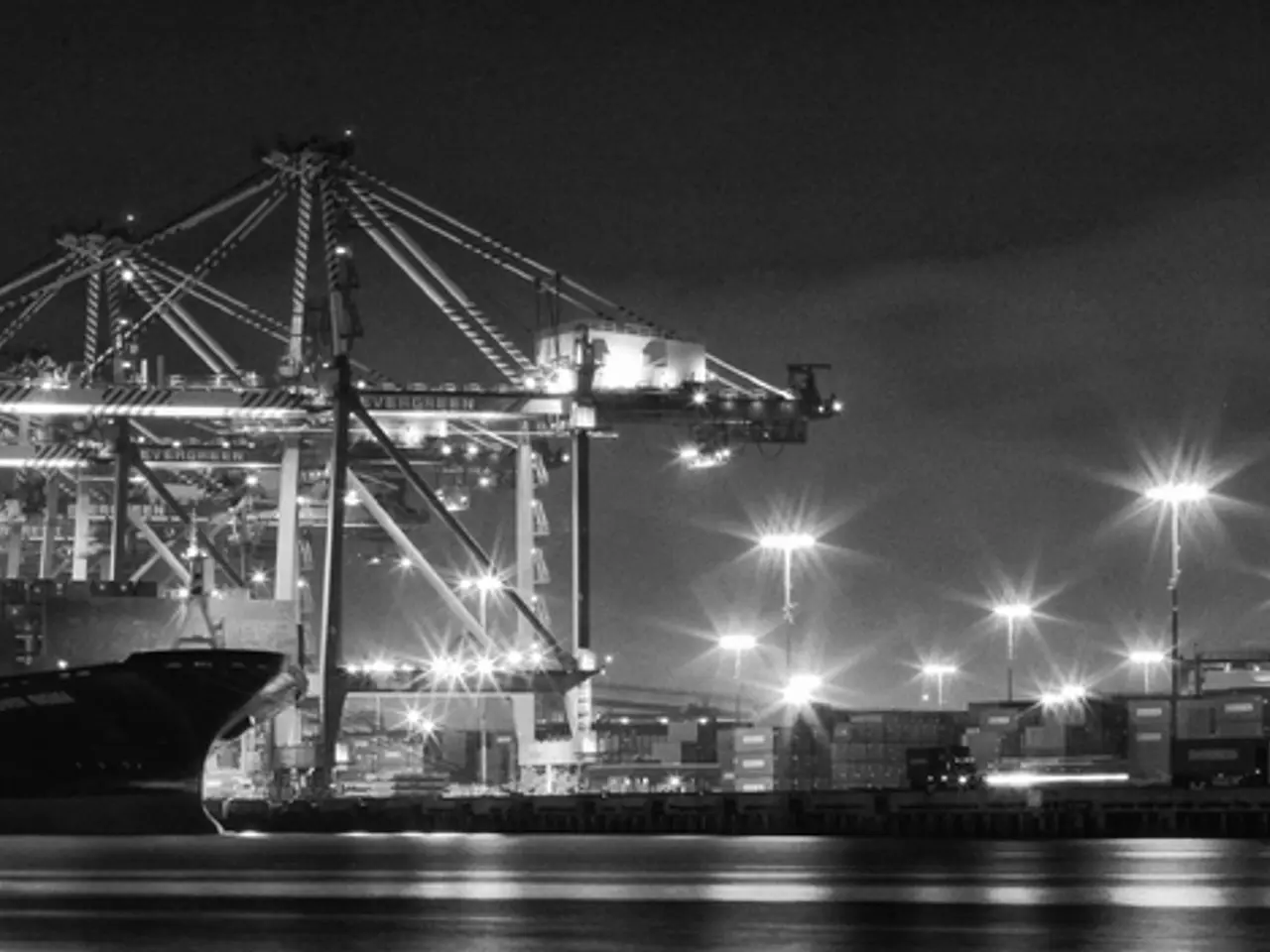
Economic outlook in Bremen, as per the Chamber of Commerce's report, shows a grim picture
In the city of Bremen, a sense of economic pessimism has taken hold, particularly in the industry and construction sectors. Weak demand for industrial products, both domestically and abroad, has contributed to this gloomy outlook.
Recent data shows that production in key sectors such as chemicals and fabricated metal products has fallen short, offsetting gains made by the automotive industry. This trend is concerning, as Bremen's economy is heavily reliant on exports, making it vulnerable to external factors such as the imposition of higher US tariffs on imports from the EU.
These tariffs, expected to rise to 30% from August 2025, pose additional risks to Bremen’s export-oriented industrial sectors. They threaten export competitiveness by raising operational costs and limiting market access, thus dampening industry sentiment and investment.
The construction industry in Germany, including Bremen, is also anticipated to contribute negatively to overall economic growth in the second quarter of 2025. This weakness stems from a general slowdown in activity, likely influenced by tighter financing conditions, cost pressures, and subdued demand for building projects.
One notable example of the challenges facing Bremen's industrial sector is the halt of a major steel production transition project by ArcelorMittal. The decision was made due to market conditions and concerns about the economic viability of low-carbon steel production, even with substantial government subsidies.
Despite these challenges, Bremen is actively seeking to diversify and rejuvenate its economic base by investing in emerging sectors like renewable energy and wind power. The city has even formed international partnerships, such as with Türkiye, to further these efforts.
However, the current economic pessimism in Bremen is primarily driven by the entrenched difficulties in traditional industrial output and construction activity related to external trade tensions and structural market issues.
In contrast, the economic situation in Bremerhaven appears to be slightly improved. Companies surveyed in the region no longer want to reduce personnel or cut back on investments as much, and the mood in Bremerhaven's economy has brightened compared to the spring.
The Chamber of Commerce Bremen's report suggests that companies in Bremerhaven are more optimistic about the future than those in Bremen, although the report does not provide detailed information about the current state of the economy outside of the manufacturing sector and construction industry.
As Bremen navigates these economic challenges, it remains crucial for the city to address the factors contributing to the pessimism in the industry and construction sectors, while also exploring opportunities in emerging industries to secure a sustainable and resilient economic future.
The economic pessimism in Bremen, exacerbated by external trade tensions and structural market issues, has particular impact on sectors like industry and finance, with the threats of rising US tariffs posing additional risks to Bremen's export-oriented industrial sectors. Furthermore, the construction industry in Bremen is anticipated to negatively contribute to economic growth in the second quarter of 2025, due to a general slowdown in activity, tight financing conditions, cost pressures, and subdued demand for building projects.




