
Decision on Minimum Wage Considered Significant Reflection of Public Sentiment
The latest minimum wage decision by a commission has sparked a heated debate among economists and business representatives, with warnings about potential job losses and a weaker German economy. DIW President Fratzscher still believes more could have been done. The SPD advocates for a minimum wage of €15.
The looming costs for logistics companies
The logistics industry anticipates pricey shakeups following the decision to increase the minimum wage from the current €12.82 to €14.60 per hour in two steps by 2027. Facing increased personnel costs, logistics companies may opt for automation and digitization to cut wages, as suggested by the Federal Association of Parcel and Express Logistics (BPEX). If this investment and growth driver proposed by the government fails to ignite, companies warn of turbulent times.
Farmers raisin' concerns for high berry prices
The farmers' association cautions about severe consequences for many businesses due to the minimum wage hike. Farmers' president Joachim Rukwied declares that this increase could potentially force the displacement of fruit, vegetable, and wine cultivation from Germany, driving competition within the EU, and causing further production relocation abroad. A special regulation for seasonal workers is urgently required, according to Rukwied, who proposes they should receive 80 percent of the minimum wage.
retail sector: Jobs at stake
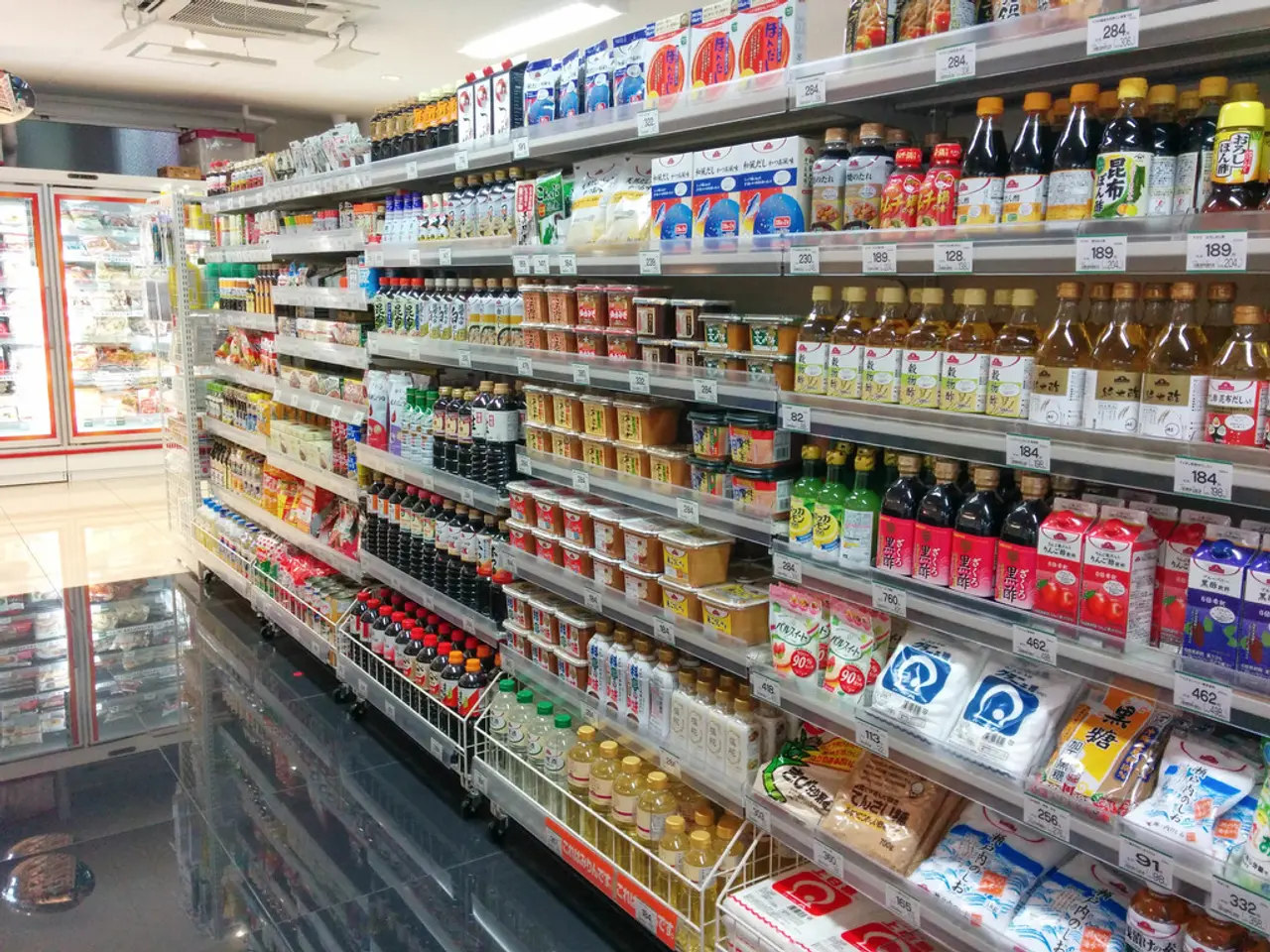
The German Retail Federation (HDE) strongly criticizes the increase in the minimum wage, expressing concerns that numerous jobs in retail will be at risk. The decision has put a heavy strain on the sector, which employs numerous low-wage workers such as cashiers, stock clerks, and cleaners. HDE President Alexander von Preen sees it as essential that jobs make sense for private employers, or they may be lost.
A bitter pill to swallow - Economy's perspective
The decision of the minimum wage commission has divided opinions among economic representatives and experts. DIW President Marcel Fratzscher calls the commission's decision not to increase the minimum wage to €15 "a missed opportunity." A higher minimum wage would better the lives of millions of employees, boost productivity, promote fair competition, and make the labor market more attractive, especially in the context of the acute labor shortage.
Marie-Christine Ostermann, president of the family entrepreneurs, shares sentiments of disappointment, likening the decision to a "hefty swallow from the bottle." For some companies, the increase at the beginning of 2027 assumes an economic upswing that is not yet visible.
A pragmatic increase?
Wage policy expert Holger Schäfer from the employer-friendly Institute of the German Economy (IW) suggests the increase of over eight percent next year and another five percent in 2027 may reflect an optimistic view of the labor market, as it is uncertain whether the current crisis can be overcome soon and businesses' demand for labor will recover. Meanwhile, Malte Lübker, an expert at the trade union-affiliated Institute for Economic and Social Research (WSI), notes that the commission's increase aligns with the wage development of the past two years.
The battle continues: 15€ or bust?
Despite top-tier SPD politicians announcing that the minimum wage would increase to €15 in 2026, the commission stuck to their decision, leading the SPD labor wing to distance itself from the decision. The black-red coalition should legally increase the minimum wage to €15, asserts Cansel Kiziltepe, the federal chairwoman of the SPD's working group on work. For Kiziltepe, a minimum wage of €15 represents a life of dignity for full-time workers, who should not have to struggle financially or face poverty in old age. The debate surrounding the minimum wage appears unresolved, with key players advocating for 15€ or bust.
The countdown begins
With the commission's decision to increase the minimum wage in Germany to €14.60 by 2027, labor-intensive industries, such as logistics, retail, and agriculture, will witness substantial changes. Higher labor expenses loom for employers, potentially leading to price adjustments or automation. Yet, the wage increase also brings improved earnings for workers in these sectors. The government's decision is a delicate balance between socio-economic goals, economic growth, and labor market realities in Europe's largest economy.
[1] https://de.statista.com/[2] https://ec.europa.eu/eurostat/[3] https://www.berufebilder.de/[4] https://www.Handelsblatt.com/
- German Farmers' Association
- Minimum Wage
- DIW
- Employees
- Employers
- Institute of the German Economy Cologne
- Carsten Linnemann
- Agriculture Industry
- Logistics Industry
- Retail Industry
- Trade Union-affiliated Institute for Economic and Social Research
- The logistics industry's financial concerns intensify as they anticipate vast changes due to the minimum wage increase, including the possibility of automation and digitization to mitigate rising personnel costs.
- In the retail sector, there is growing anxiety about preserving jobs amidst the potential for numerous positions to become obsolete following the minimum wage increase, as private employers might find it challenging to maintain profitability.